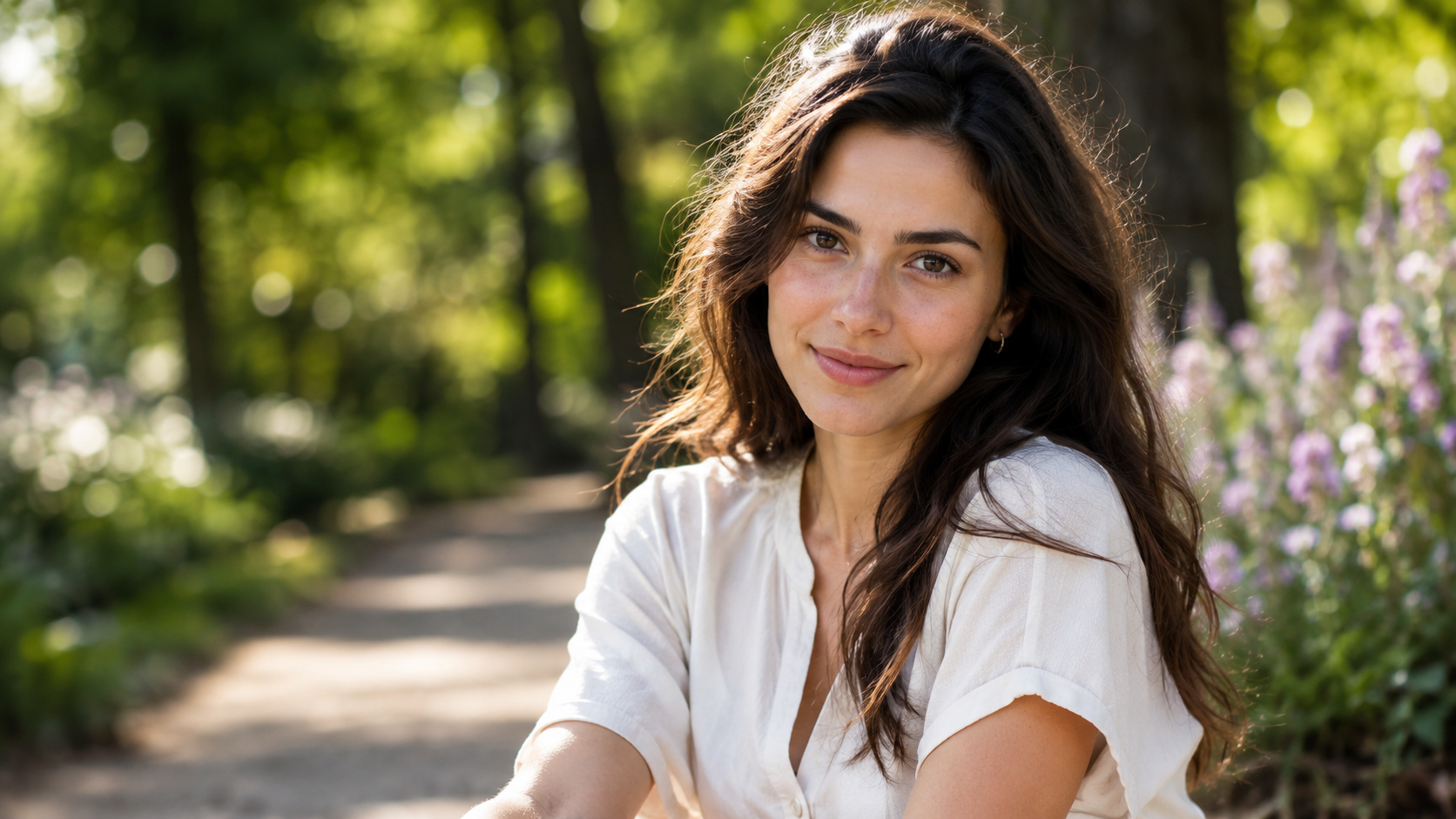
Understanding Light Quality
Light quality refers to how hard or soft the light appears — specifically, how defined the shadows it casts are. Quality is determined by the size of the light source relative to the subject. A large light source creates soft, gradual shadows. A small light source creates hard, defined ones.
The sun is enormous, but it is so far away that it acts as a small, concentrated point source — which is why direct sunlight is harsh. Cloud cover diffuses that same light across the entire sky, effectively making it a massive soft source. Understanding this relationship lets you predict and modify how any natural light scene will behave.
Hard vs. Soft Light
Hard light produces sharp shadow edges, high contrast, and visible texture. It is dramatic and well-suited to subjects where texture and form are part of the story — architecture, landscapes, still life. On human faces, it reveals every blemish and exaggerates lines.
Soft light produces gradual shadow transitions, lower contrast, and a flattering, even quality. It is well-suited to portraits, product photography, and any situation where you want the subject rather than the light itself to carry the image.
Direction of Light
Direction is as important as quality. The same soft light from different angles produces entirely different results.
- Front light: Light coming from behind the camera illuminates the subject evenly with minimal shadows. It is safe and clean but can feel flat and two-dimensional. Works well for even skin rendering.
- Side light: Light coming from the left or right creates shadows that define the contours of a face or form. It adds depth and dimension. At 45 degrees, it produces the classic portrait lighting pattern. At 90 degrees, it becomes dramatic split lighting.
- Backlight: Light coming from behind the subject creates a rim or halo effect that separates the subject from the background. It requires exposure compensation to avoid silhouette unless that is the intent. Backlighting at golden hour is particularly striking.
- Top light (overhead): Direct overhead light — common at midday — creates unflattering shadows under the eyes, nose, and chin on human subjects. In most portrait scenarios, it is the least useful direction.
Golden Hour
Golden hour is the period roughly one hour after sunrise and one hour before sunset. The sun is near the horizon, so its light travels through more atmosphere before reaching the subject. This filters out shorter blue wavelengths and produces warm, orange-toned light with a soft quality and long shadows.
At this time of day, the sun is also low enough to use as a side or backlight source without requiring the subject to look directly into it. The light changes quickly — often the best 10–15 minutes are in the final stretch before the sun drops below the horizon.
Blue Hour
Blue hour occurs just before sunrise and just after sunset. The sun is below the horizon and the sky provides a cool, even ambient light. Shadows are minimal, contrast is low, and the color tone is distinctly blue.
For portraits, blue hour light is soft and even but requires higher ISO or a wider aperture. It works particularly well when combined with artificial light sources — a window, a street lamp, or a lit interior — where the warm artificial light contrasts with the cool ambient sky.
Midday Light Challenges and Solutions
Midday sun — typically from about 10am to 2pm — is high in the sky, intense, and produces hard, downward shadows. It is the most difficult natural light to work with for portraits.
Several practical approaches work in these conditions:
- Open shade: Move subjects under a tree canopy, overhang, or into a shaded area. They receive soft, diffused light from the bright sky above rather than direct sun.
- Reflectors: Position a white or silver reflector below the subject's face to fill the downward shadows with bounced light.
- Fill flash: A speedlight at reduced power fills shadows on the face without overpowering the ambient light.
- Backlit positioning: Place the subject with the sun behind them, exposing for their face. The background will be bright, but the subject's face will be in soft shade.
Overcast Light
An overcast sky is underrated. The clouds diffuse the sun across the entire sky, creating a large, even, soft light source that wraps around subjects from every direction. Shadows are soft and fill almost naturally. There is no single dominant light direction to manage.
For portrait photography, overcast days produce clean, consistent results across any time of day. Colors render accurately and skin tones appear neutral. The limitation is that overcast light lacks drama — it is even and safe but rarely striking. It works best when the subject, expression, or composition carries the image.
Frequently Asked Questions
What time of day is best for outdoor portraits?
The hour after sunrise and the hour before sunset — golden hour — produce warm, directional light with long shadows and a flattering quality. Overcast conditions work well throughout the day. Midday sun between 10am and 2pm is the most challenging.
How do I handle harsh shadows on a subject's face?
Move the subject into open shade, use a reflector to fill shadows, position them so the sun is behind or to the side rather than directly overhead, or wait for softer light. A white foam board on the shadow side can lift fill light without adding color cast.
Is overcast light good for photography?
Yes. An overcast sky acts as a large softbox, producing even, diffused light with soft shadows. It is particularly flattering for portraits and works well for product photography. Colors appear accurate and skin tones render cleanly.
What is blue hour and how do I shoot in it?
Blue hour occurs just before sunrise and just after sunset when the sky turns a deep blue. Ambient light is low but even. Use a tripod, set ISO between 400–1600 depending on the scene, and choose a wide aperture or longer shutter speed. The light lasts 20–30 minutes.
How does the direction of light change a portrait?
Front light is flat and even — safe but less dimensional. Side light creates shadows that define facial structure. Backlight separates the subject from the background and creates a rim or halo effect. Each direction produces a distinct mood.